
User Page (Blog)
Florianópolis Tunnels
on February 22, 2017During the 50,08km of Florianópolis road, that reaches Governador Cleso Ramos, Biguaçu and Paçolha cities, the road will have a highway velocity (100 km/h). The road will have 50km of double-lane, six clover-leaf road junction, 22, 3 viaducts, 12 bridges and 6 tunnels.
CJC developed the project of 4 tunnels, which was the pair of tunnel 1 (with 980 of extension each one) and the pair of tunnel 4 (with 821,55m each). Both NATM projects includes, earthmoving, firefighting, installations, paving, retaining and tunnels entrances.
Source:http://ndonline.com.br/florianopolis/noticias/contorno-viario-de-florianopolis-tera-seis-intersecoes-durante-os-50-08-km ;
http://dc.clicrbs.com.br/sc/noticias/noticia/2016/06/com-novo-prazo-contorno-viario-da-grande-florianopolis-esbarra-em-quatro-entraves-6023440.html
Lima Metro - Linha 4
on February 22, 2017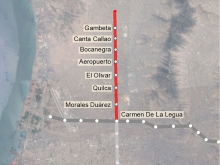
Line 4 or Red line, in construction will have approximately 8km long and 8 stations, connecting la Legua until Gambeta.
CJC developed the stations basic project (tender).
Lima METRO - LINE 2
on February 21, 2017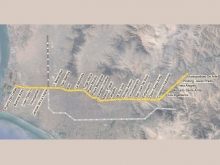
Line 2 or Yellow line, in construction, will have approximately 27km long and 27 stations, connecting Puerto de Callao until Municipalidad de Ate.
CJC developed the stations basic project (tender).
LINE 2
on February 21, 2017Los Teques metro was partly inaugurated November 3, 2006. It was built to link Los Teques city to Venezuelan capital, Caracas and to free up the Panamericana road which cross both cities. It has a connection with Las Adjuntas station of Caracas Metro.
CJC developed and still works in detailed and installations project, author’s supervision at stations, ventilation and emergency exit shafts, shield tunnels and NATM tunnels.
LOS TEQUES METRO – VENEZUELA
on February 21, 2017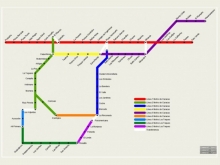
LINE 5
on February 21, 2017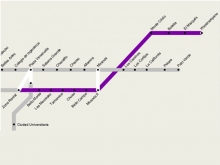
The first Line 5 stretch in Caracas subway is composed by 7.3km and 5 stations: Bello Monte, Tamanaco, Chuao, Bello Campo e Miranda. The track tunnels were excavated by two tunnelling machines EPB type (Earth Pressure Balance). Bello Monte station was inaugurated on November 2015 and the others stations was built by NATM method. It has the following stations, from west to east: Bello Monte, Las Mercedes, Tamanaco, Chuao, Bello Campo, Miranda/Hugo Chávez (previously: Parque del Este II).
The following stations proceed in construction: Miranda/Hugo, Chávez (previously: Parque del Este II), Montecristo, Boleíta, El Marqués, Warairarepano.
CJC developed and still produces the detailed and installations projects and author’s supervision at stations, ventilation and emergency exit shafts, shield tunnels and NATM tunnels.
CARÁCAS METRO – VENEZUELA
on February 21, 2017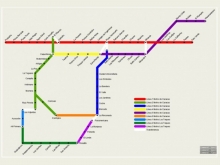
The Caracas Metro was inaugurated on January 2, 1983 and currently extends 54,2 km distributed between four lines. It has a complementary system called Metrobus, it is a bus transit network that leaves from the subway stations reaching places where the subway does not have direct coverage. There is four lines in service, with a total of 44 stations and 54,2 km that transports more than 2000000 users per day.
Source: http://mapa-metro.com/pt/Venezuela/Caracas/Caracas-Metro-Mapa.htm
Caracas METRO - LINE 4
on February 21, 2017LINE 4
on February 21, 2017The Capuchinos line — Rental zone works as an extension of line 2 and transports around 40000 users per day. It was inaugurated in 2006. It has the following stations, from northeast to southeast: Zona Rental, Parque Central, Nuevo Circo, Teatros, Capuchinos, Maternidad, Artigas, La Paz, La Yaguara, Carapita, Antímano, Mamera, Ruiz Pineda e Las Adjuntas
CJC members (by F. Ferraz) developed the detailed and installations projects, author’s supervision at NATM tunnels, developed alternative projects in NATM for Teatros stations, ventilation and emergency exit shafts and shield tunnels.
CARÁCAS METRO – VENEZUELA
on February 21, 2017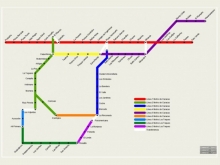
The Caracas Metro was inaugurated on January 2, 1983 and currently extends 54,2 km distributed between four lines. It has a complementary system called Metrobus, it is a bus transit network that leaves from the subway stations reaching places where the subway does not have direct coverage. There is four lines in service, with a total of 44 stations and 54,2 km that transports more than 2000000 users per day.
Source: http://mapa-metro.com/pt/Venezuela/Caracas/Caracas-Metro-Mapa.htm
CJC ENGINEERING AND PROJECTS | +55 11 5589 9549 | Cubatão Street 86 - São Paulo - Brazil