User Page (Blog)
SE Aquinos (Emergency Shaft)
on February 21, 2017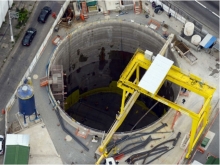
Line 6
on February 21, 2017When it starts its operation, the expectation is that Line 6 — Orange will transport 633 thousand users per day. Its 15,3 km of extension will cross huge business centers and regions that are located important education institutions. Line 6 will be connected to Metro lines (Line 1 — Blue and Line 4 — Yellow) and two other CPTM lines (Line 7 — Ruby and Line 8 — Diamond).
CJC developed the civil detailed projects of stations, ventilation and emergency exit shafts, shield and NATM tunnels. In stands out Tiête ventilation and emergency exit and Aquinos shafts, already built.
It will comprise the following stations: Brasilândia, Vila Cardoso, Itaberaba, João Paulo I, Freguesia do Ó, Santa Marina, Água Branca (connection with Line 7 and 8 from CPTM), SESC-Pompéia, Perdizes, PUC- Cardoso de Almeida, Angélica- Pacaembú, Higienópolis- Mackenzie (connection with line 4), 14 Bis, Bela Vista e São Joaquim (connection with Line 1).
CJC developed the installation detailed projects and author’s supervision of stations, ventilation and emergency exit shafts, shield and NATM tunnels. In stands out Tiête ventilation and emergency exit and Aquinos shafts, already built.
Tiête ventilation and emergency exit shaft is a multiple shaft that will be used as point of departure of tunnelling machines, that will dig north to south stretch of Line 6 towards Brasilândia and 14 Bis stations, respectively.
SÃO PAULO METRO – BRAZIL
on February 21, 2017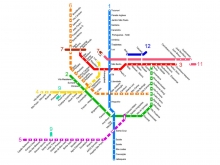
São Paulo Metro is currently in operation since September 14, 1974. It is the biggest and busiest transport system in Brazil, with 78,4km long in railway lines divided in six lines, that have a total of 67 stations (61 operated by Metrô, four by ViaQuatro and two stations operated by Metrô and ViaQuatro; Luz and República). Comprising Line 1 – Blue system (Jabaquara/Tucuruvi), 2-Green (Vila Madalena-Vila Prudente), 3-Red (Corinthians-Itaquera-Palmeiras-Barra Funda), 4-Yellow (Luz-Butantã), 5 – Purple (Capão redondo – Adolfo Pinheiro – Chácara Klabin) and 15 – Silver (Vila Prudente – Oratório). It has a connection with the urban trains network, thru a link with line from Companhia Paulista de Trens Metropolitanos (CPTM) (meaning São Paulo metropolitan trains company) in Brás, Tatuapé, Palmeiras-Barra Funda, Luz, Corinthians-Itaquera, Santo Amaro, Tamanduateí and Pinheiros station, among others inter modal transports in São Paulo city. Daily, São Paulo network transports 4,6 million of users.
CJC worked and still works in all São Paulo metro lines.
Source: https://pt.wikipedia.org/wiki/Metr%C3%B4_de_S%C3%A3o_Paulo
Line 5
on February 21, 2017It is composed by the stretch between Capão Redondo and Adolfo Pinheiro stations. It is foreseen that all the stations from Line 5 will be finished in the end of 2017, excepts Campo Belo station, which will be conclude in 2018 and will be connect to Line 17 — Gold from the second semester of 2019. When concluded, the line will become, in combination with Line 1 — Blue, 2 — Green (Metrô) and 9 — Emerald (CPTM), a grid with a powerful capacity connecting Santo Amaro neighborhood to an important tertiary sector centers as Moema, Vila Mariana and Brooklin. All the stations in operation are elevated, with exception of Largo Treze and Adolfo Pinheiro stations, which are under grounded, as will be all the stations that are in construction phase.
CJC developed the CQP works (Project Quality Control) for lots 5, 6 and 7. Collaborated with the constructor consortiums, producing and technically supporting the detailed projects of foundations for overhead cranes and cranes.
Served numerous services of consulting engineering, clarifying and reducing doubts from the detailed project, proposing technical alternative solutions.
In partnership with Consórcio Metropolitano 5 (5 Metropolitan Consortium — Lot 7), produced and developed constructive alternatives that optimize the constructive methodology of the intern structures in access shafts in Chácara Klabin, Botucatu ventilation and emergency exit, J J Melo and Dionisio da Costa ventilation and emergency exit and Bandeirantes shafts, reducing the execution time of its construction.
With the same approach, CJC developed the excavation and lining wall detailed project in Santa Cruz Station.
Source: https://pt.wikipedia.org/wiki/Linha_5_do_Metr%C3%B4_de_S%C3%A3o_Paulo
São Paulo metro - Brazil
on February 21, 2017
São Paulo Metro is currently in operation since September 14, 1974. It is the biggest and busiest transport system in Brazil, with 78,4km long in railway lines divided in six lines, that have a total of 67 stations (61 operated by Metrô, four by ViaQuatro and two stations operated by Metrô and ViaQuatro; Luz and República). Comprising Line 1 – Blue system (Jabaquara/Tucuruvi), 2-Green (Vila Madalena-Vila Prudente), 3-Red (Corinthians-Itaquera-Palmeiras-Barra Funda), 4-Yellow (Luz-Butantã), 5 – Purple (Capão redondo – Adolfo Pinheiro – Chácara Klabin) and 15 – Silver (Vila Prudente – Oratório). It has a connection with the urban trains network, thru a link with line from Companhia Paulista de Trens Metropolitanos (CPTM) (meaning São Paulo metropolitan trains company) in Brás, Tatuapé, Palmeiras-Barra Funda, Luz, Corinthians-Itaquera, Santo Amaro, Tamanduateí and Pinheiros station, among others inter modal transports in São Paulo city. Daily, São Paulo network transports 4,6 million of users.
CJC worked and still works in all São Paulo metro lines.
Source: https://pt.wikipedia.org/wiki/Metr%C3%B4_de_S%C3%A3o_Paulo
Line 4 – São Paulo metro
on February 21, 2017Line 4- Yellow São Paulo Metro, originally called as Southeast-Southwest line, will comprise, when finished, the stretch between Luz and Vila Sônia stations. The first stretch, between Faria Lima and Paulista stations, was inaugurated on May 25, 2010, currently the line operates from Monday to Sunday, in the stretch between Luz and Butantã stations, stops in República, Paulista, Fradique Coutinho, Faria Lima and Pinheiros stations.
CJC developed the track, stations and ventilation and emergency exit shafts detailed project, including architecture, excavation, retaining, structures, installations, systems and author’s supervision in constructions. Comprising tunnels, shields, NATM and Morumbi, Butantã, Faria Lima, Fradique Coutinho, Oscar Freire, Paulista (partial), Higienópolis and República stations.
Source: https://pt.wikipedia.org/wiki/Linha_4_do_Metr%C3%B4_de_S%C3%A3o_Paulo
São Paulo metro -Brazil
on February 21, 2017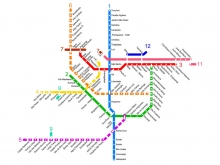
São Paulo Metro is currently in operation since September 14, 1974. It is the biggest and busiest transport system in Brazil, with 78,4km long in railway lines divided in six lines, that have a total of 67 stations (61 operated by Metrô, four by ViaQuatro and two stations operated by Metrô and ViaQuatro; Luz and República). Comprising Line 1 – Blue system (Jabaquara/Tucuruvi), 2-Green (Vila Madalena-Vila Prudente), 3-Red (Corinthians-Itaquera-Palmeiras-Barra Funda), 4-Yellow (Luz-Butantã), 5 – Purple (Capão redondo – Adolfo Pinheiro – Chácara Klabin) and 15 – Silver (Vila Prudente – Oratório). It has a connection with the urban trains network, thru a link with line from Companhia Paulista de Trens Metropolitanos (CPTM) (meaning São Paulo metropolitan trains company) in Brás, Tatuapé, Palmeiras-Barra Funda, Luz, Corinthians-Itaquera, Santo Amaro, Tamanduateí and Pinheiros station, among others inter modal transports in São Paulo city. Daily, São Paulo network transports 4,6 million of users.
Source: https://pt.wikipedia.org/wiki/Metr%C3%B4_de_S%C3%A3o_Paulo
CJC worked and still works in all São Paulo metro lines.
Sumaré – Vila Madalena Stretch
on February 21, 2017Brigadeiro and Trianon Stations
on February 21, 2017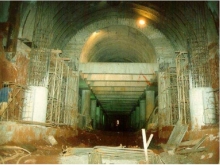
SÃO PAULO METRO - BRAZIL
on February 21, 2017São Paulo Metro is currently in operation since September 14, 1974. It is the biggest and busiest transport system in Brazil, with 78,4km long in railway lines divided in six lines, that have a total of 67 stations (61 operated by Metrô, four by ViaQuatro and two stations operated by Metrô and ViaQuatro; Luz and República). Comprising Line 1 – Blue system (Jabaquara/Tucuruvi), 2-Green (Vila Madalena-Vila Prudente), 3-Red (Corinthians-Itaquera-Palmeiras-Barra Funda), 4-Yellow (Luz-Butantã), 5 – Purple (Capão redondo – Adolfo Pinheiro – Chácara Klabin) and 15 – Silver (Vila Prudente – Oratório). It has a connection with the urban trains network, thru a link with line from Companhia Paulista de Trens Metropolitanos (CPTM) (meaning São Paulo metropolitan trains company) in Brás, Tatuapé, Palmeiras-Barra Funda, Luz, Corinthians-Itaquera, Santo Amaro, Tamanduateí and Pinheiros station, among others inter modal transports in São Paulo city. Daily, São Paulo network transports 4,6 million of users.
CJC worked and still works in all São Paulo metro lines.
Source: https://pt.wikipedia.org/wiki/Metr%C3%B4_de_S%C3%A3o_Paulo
CJC ENGINEERING AND PROJECTS | +55 11 5589 9549 | Cubatão Street 86 - São Paulo - Brazil